Cold weather puts your truck’s cooling system to the test, making proper coolant maintenance essential before temperatures drop. Checking coolant condition, antifreeze protection, fluid levels, hoses, the radiator, water pump, and fan clutch can reveal developing problems early. Seasonal maintenance helps protect your engine from freezing, overheating, leaks, unexpected breakdowns, and costly winter downtime.
Summer might not yet be over, but as the days start to get shorter and the air colder, it’s time to start planning for the winter weather. When it comes to your truck, cold weather can expose cooling-system problems that you might not have noticed all summer. Maybe you were handling long hauls, heavy loads, and hot pavement for miles without complaint, then suddenly dropping temperatures start to bring up a different challenge. If your truck coolant is old, contaminated, low, or improperly maintained, winter can turn a small issue into an expensive breakdown.
Your cooling system does more than keep your diesel engine from overheating. It also needs to protect the system when temperatures fall below freezing. Before winter settles into Michigan, checking your coolant should be high on your seasonal maintenance list.
Why Truck Coolant Matters During Cold Weather
Your engine generates tremendous heat whenever it runs. To control that heat, your diesel cooling system circulates coolant through passages in the engine block. The coolant absorbs radiant heat before traveling to the radiator, where that heat transfers to the outside air.
Then the process starts all over again.
Coolant has another important winter job. Most engine coolants combine water with antifreeze so the fluid can withstand low temperatures without freezing. And when it comes down to it, that added layer of protection matters because frozen or partially frozen coolant can interfere with proper circulation in your rig and put cooling-system components at risk.
Coolant is important year-round. In summer, it fights excessive heat. During a Michigan winter, it still manages engine temperature while providing essential freeze protection.
What Happens to Coolant as It Ages?
You might not realize this, but like other fluids in your truck, coolant does not last forever.
Repeated heating and cooling gradually degrades the fluid. As coolant deteriorates, it may become less effective at absorbing and transferring heat. That is why coolant replacement should follow the truck or coolant manufacturer's recommended service interval.
Contamination is also something to be aware of. Your old coolant may can collect rust, scale, debris, or residue inside the system can interfere with proper coolant flow and reduce cooling efficiency.
Just because your coolant looks healthy, don’t assume it is until you can see fluid in the reservoir. Its condition matters just as much as its level.
A seasonal coolant inspection gives you a chance to catch trouble before colder weather puts additional stress on the system.
Check Your Coolant Level Before Temperatures Drop
A low coolant level deserves attention.
Your truck stores engine coolant in a reservoir before the water pump circulates it through the cooling system. When the level falls too far, the system may not have enough coolant to absorb and transport engine heat effectively.
Check the coolant level according to your truck manufacturer's procedure, preferably when the engine is cold and it is safe to inspect the system. Never remove a pressurized cooling-system cap from a hot engine. Hot coolant can cause severe burns.
If the level keeps dropping after you top it up, don't just keep adding coolant and carrying on. A recurring loss can indicate a leak that needs diagnosis.
Look around the truck for visible signs such as dried coolant residue, damp hoses, drips, or staining around connections. Catching a leak in the yard beats finding it after your truck is stranded on the shoulder.
Make Sure You Have Proper Antifreeze Protection
Not every coolant product uses the same antifreeze-to-water ratio, so there is no single mixture you should blindly use for every truck.
The best way to replace the coolant in your system is to follow the engine manufacturer and coolant manufacturer's specifications when checking or replacing coolant. The right product and concentration helps provide the cold-weather protection your engine requires.
This point becomes especially important if water has been added to the system during previous repairs or roadside emergencies. Adding too much water can change the coolant concentration and reduce its resistance to freezing.
A technician can test the coolant's freeze protection and condition rather than relying on its color or appearance alone.
Inspect More Than Just the Fluid
Healthy coolant cannot compensate for failed cooling-system hardware. Getting your truck ready for the next season, is making sure the supporting components are working properly too.
Water Pump
Your water pump keeps coolant moving through the engine. If it stops circulating coolant correctly, the system cannot transfer heat as designed. Cooling-system problems linked to the pump can eventually contribute to overheating and roadside trouble.
Radiator
After coolant absorbs heat from the engine, it travels through the radiator, where airflow carries that heat away. Restricted airflow or internal cooling problems can reduce the system's ability to shed heat.
Cooling Fan and Fan Clutch
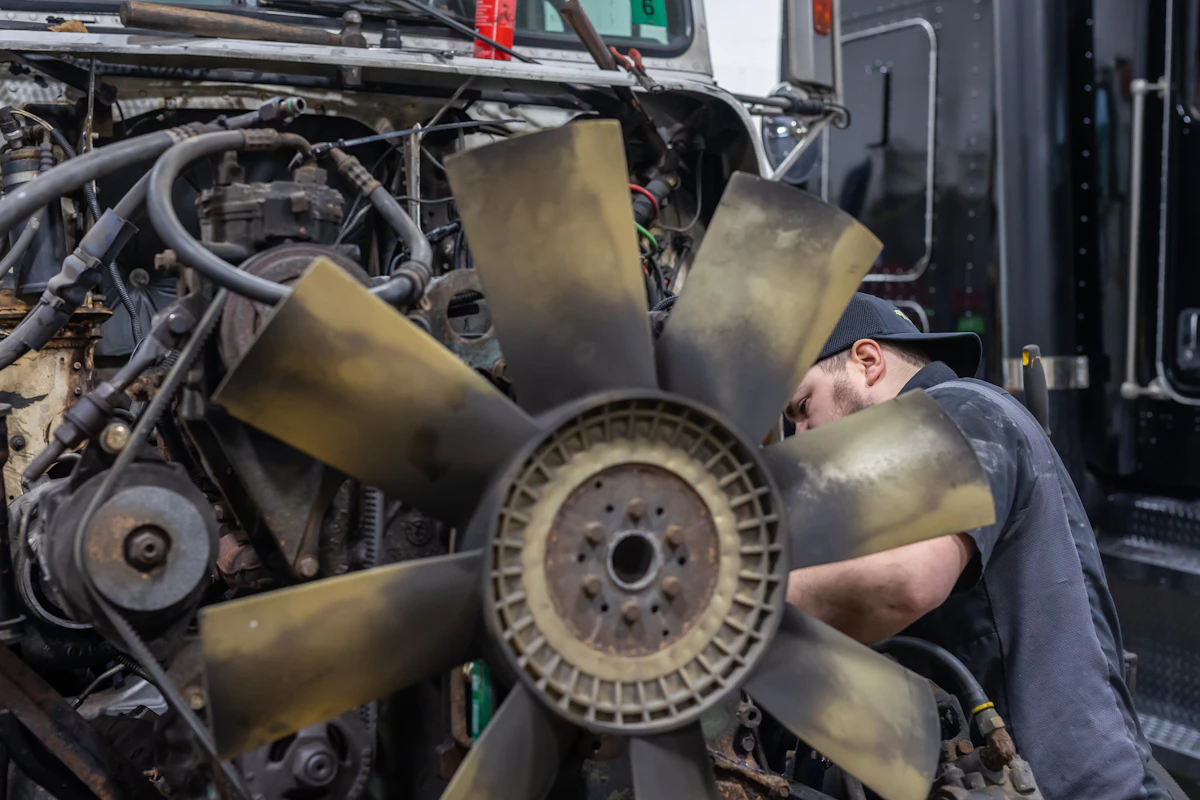
At highway speed, airflow through the grille often supplies substantial cooling. At lower speeds, the cooling fan becomes especially important. The fan clutch controls when that fan operates.
A malfunctioning fan clutch can contribute to overheating, particularly when the truck spends significant time idling or moving through stop-and-go traffic.
Hoses and Connections
Cold temperatures can be unforgiving to already weakened components. Check coolant hoses and accessible connections for cracking, deterioration, looseness, or visible leakage. A hose that barely survived warm-weather operation isn't something you want to gamble on during a freezing morning.
Watch for Signs Your Cooling System Needs Attention
Your truck will often give you clues before a cooling-system problem becomes catastrophic.
Keep an eye on the temperature gauge and investigate abnormal readings instead of assuming they'll disappear. Visible coolant leaks, repeated coolant loss, overheating, or unusual temperature fluctuations all deserve attention.
You should also watch for problems that appear only under certain conditions. A truck that maintains a normal temperature at highway speed but runs hotter while idling, for example, could point to an airflow- or fan-related issue.
Overheating is a common cause of roadside breakdowns, and possible contributors include a malfunctioning fan clutch, restricted radiator, or failed water pump. Preventive inspection helps you address those problems while the truck is still in a convenient place to repair.
Add Cooling-System Checks to Preventive Maintenance
Winter preparation works best when it becomes part of your broader preventive maintenance routine.
Heavy-duty trucks operate under demanding conditions. They accumulate long hours, heavy loads, vibration, heat cycles, and thousands of miles between seasons. Waiting for something to fail before inspecting it usually costs more than finding deterioration early.
Before sustained cold weather arrives, consider checking:
- Coolant level and general condition
- Coolant freeze protection
- Manufacturer-recommended coolant service interval
- Reservoir and accessible cooling-system connections
- Radiator condition
- Coolant hoses
- Water pump condition
- Cooling fan and fan clutch operation
- Evidence of coolant leaks
This isn't busywork. A straightforward winter truck maintenance inspection can help uncover weaknesses that could otherwise show themselves at the worst possible time.
Don't Forget the Rest of Your Truck's Cooling Systems
Your engine isn't the only system managing heat.
Heavy-duty trucks can also use a transmission cooler and engine oil cooler. Transmission fluid or gear oil absorbs heat during operation before the transmission cooler helps release that heat. Engine oil can perform a similar role as it moves through an oil cooler.
These systems operate separately from your primary liquid engine-coolant circuit, but they share the same basic goal: moving damaging heat away from critical components.
That makes cooling-system condition an important part of whole-truck maintenance, not simply an engine concern.
Get Your Truck Ready Before the First Hard Freeze
Winter doesn’t exactly sneak up on you. But, it does have a knack to show up when you aren’t expecting it and has a knack for finding weak batteries, marginal hoses, neglected fluids, and cooling-system problems. Your coolant should not be one of those surprises.
Check the level, verify the condition and freeze protection, follow the correct service interval, and inspect the components responsible for circulating and cooling the fluid. A little attention before temperatures plunge can help you avoid overheating, coolant leaks, and preventable downtime later.
If you're preparing your truck for colder weather around Britton, MI, contact Tristate Tuning and Service to have your cooling system inspected and make sure your truck is ready for the season ahead.
Contact Information
Phone Number
517-215-4722Hours
7:00AM - 3:00PM